I Tried to Build a 'That Girl' Morning Routine That Wouldn't Destroy My Will to Live — Two Weeks Later, Here's What Happened
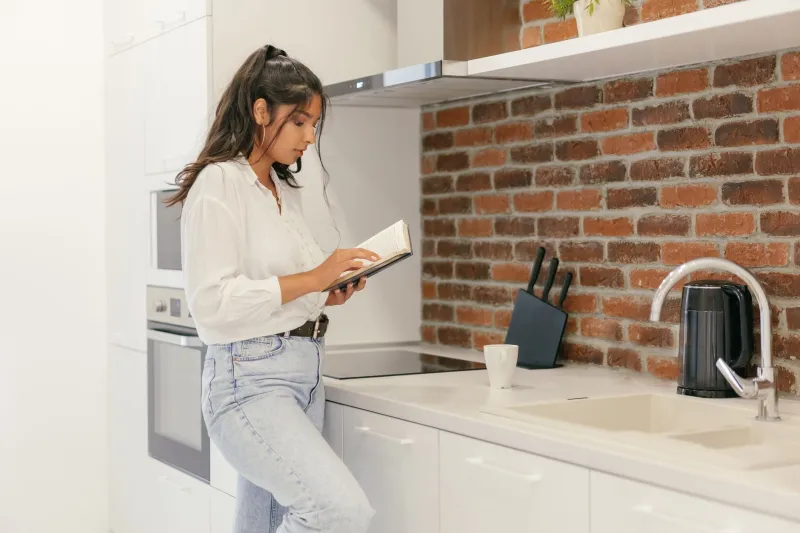
At some point over the last couple of years, my TikTok algorithm decided I needed to see a lot of very put-together women waking up at 5am. They make matcha. They do Pilates. They journal with nice pens. They drink a full liter of water before speaking to another human being. They are always wearing a matching set. Their apartments are always clean. There is always, inexplicably, natural light.
I am a person who considers it a win if I make coffee before checking my phone. We are not the same.
But here's the thing I kept thinking as I scrolled through these videos at 11pm, which is the exact opposite of what 'That Girl' would be doing: some of those habits are probably actually good? Like, the movement and the hydration and the not immediately drowning in email — those are real things with documented benefits. The problem is the packaging. The aesthetic of the trend has completely overtaken any practical information it might contain.
So I decided to do what I do: strip it down, test what's real, and report back honestly.
Step One: Figuring Out What the Trend Actually Claims
I watched approximately forty 'That Girl' routine videos before building my test version. The core elements that appeared most consistently were: an early wake time (usually 5 or 6am), immediate movement of some kind (Pilates, a walk, yoga), a hydration practice, some form of journaling or intention-setting, a 'nourishing' breakfast, and a skincare routine. Most of the videos also included some version of 'no phone for the first hour,' which I noted was always filmed on a phone.
The full version of this routine, done properly, takes somewhere between two and three hours. I have a job. I have a commute. I have a cat who requires breakfast at a specific time or she becomes genuinely difficult to live with. A three-hour morning routine is not a routine — it's a part-time job with better lighting.
My version had to fit into 45 minutes, maximum. And it had to be something I could realistically do on a Wednesday when I didn't sleep well and the news was bad.
The Stripped-Down Version I Actually Tested
Here's what I committed to for two weeks:
6:30am wake time (not 5am — I'm not punishing myself). No phone for the first 20 minutes. A full glass of water immediately. Ten minutes of movement — I chose a short YouTube yoga flow because Pilates equipment is expensive and I don't have it. Five minutes of journaling, which I defined loosely as 'write three sentences about how you feel and one thing you want to do today.' Then coffee and breakfast, made at home, eaten without scrolling.
Total time: about 40 minutes before I touched my phone or my inbox. That was the rule.
Week One: The Adjustment Period (Read: It Was Hard)
I want to be honest about the first week because the content around this trend tends to skip the part where it's annoying to change your habits.
Day one was fine because novelty carries you. Day two I hit snooze twice and had to compress everything into 25 minutes. Day three I forgot the water until I was already making coffee, which felt like failing a very simple test. The no-phone rule was harder than I expected — not because I desperately needed to check anything, but because reaching for my phone in the morning is so automatic that I did it twice before I'd even fully woken up.
The journaling was the part I resisted most. Three sentences sounds easy. But there's something about being asked to identify how you feel before you've had caffeine that is genuinely uncomfortable. Which, in retrospect, is probably the point.
By day five, the water was automatic. The movement was still something I had to talk myself into. The no-phone rule was getting easier.
Week Two: When It Started to Actually Do Something
Something shifted around day nine, and I want to be careful not to oversell this because I'm also aware that two weeks is not a rigorous study. But here's what I noticed:
I was arriving at my desk less reactive. Not calm, exactly — I'm not a calm person — but there was a small buffer between waking up and the part of the day where everything started demanding things from me. That buffer felt valuable in a way I hadn't anticipated.
The journaling, which I'd been doing reluctantly, started producing useful information. Not profound insights — mostly things like 'I'm anxious about that meeting' or 'I'm tired and I need to not take that out on anyone.' But naming those things before the day started meant I was slightly less likely to be ambushed by them later.
The movement was the piece with the most obvious physical payoff. Ten minutes isn't a workout. But ten minutes of intentional movement before sitting at a desk for eight hours made my body feel less like a protest was being organized inside it by 3pm.
What the Trend Gets Right and What It Gets Completely Wrong
The practices themselves — hydration, movement, reduced morning screen time, some form of reflection — have real backing. None of that is new information. The trend didn't invent any of it.
What the trend gets wrong is the framing. The 'That Girl' aesthetic implies that the value of the routine is the routine itself — the beautiful execution of it, the matching set, the matcha with the perfect foam. That framing makes it feel like something you either do perfectly or don't do at all. And that's exactly why most people watch the videos, feel inspired for 48 hours, and then return to their normal mornings.
The version that actually worked for me wasn't aesthetic. It was functional, slightly inconvenient, and took 40 minutes instead of three hours. My cat was still annoyed about breakfast. My coffee maker is not photogenic. I did not document any of it.
The Honest Takeaway
If you've been watching these videos and feeling vaguely guilty about your own mornings, here's what I'd actually suggest: pick two things from the trend that seem plausible for your life and try them for a week. Just two. The water and the no-phone rule are the lowest-effort, highest-return options based on my experience.
You don't need the matching set. You don't need the 5am alarm. You don't need to film it.
The routine that helps you is the one you'll actually do on a Thursday when you're tired and unmotivated. Build for that person, not for the version of yourself that exists only in good lighting.