The Internet Keeps Repackaging Burnout as a Personality Trait — I Tried Every Version and Still Can't Sleep
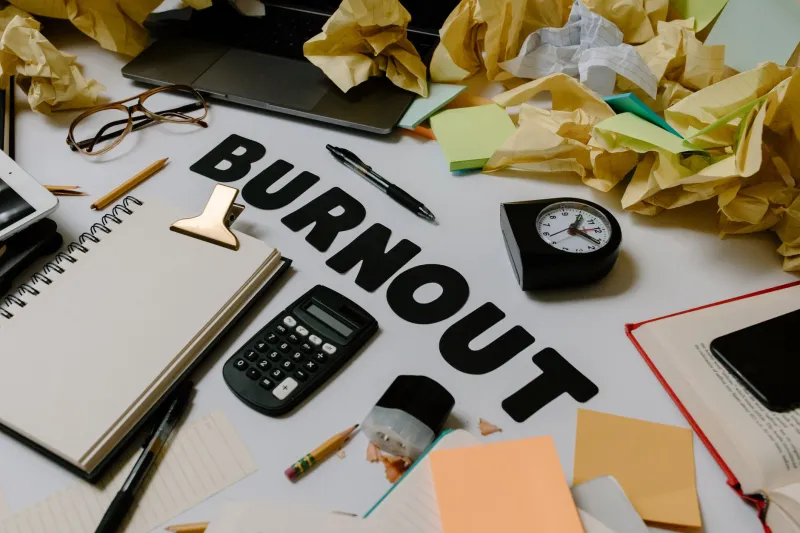
Sometime around month three of my little experiment, I was sitting at my kitchen table on a Monday morning, staring at a cold cup of coffee, technically practicing what the internet had labeled "bare minimum Monday," and I realized something: I was still exhausted. Still anxious. Still very much employed. The only thing that had changed was that I had a trendier word for what I was doing.
That's the thesis of the whole thing, really. But let me back up.
How This Started (Spoiler: My Job Was a Lot)
I didn't go looking for workplace rebellion content. It found me, the way it finds most people — through a For You Page that had apparently decided I needed saving. One week it was quiet quitting. The next it was "act your wage." Then bare minimum Mondays showed up, followed by the "no" practice, strategic calendar blocking, inbox ghosting, and something a creator called "soft sabotage," which I think just meant replying to emails slowly on purpose.
Each one came packaged with the same promise: do less, protect your energy, reclaim your life. The aesthetic was always the same too — neutral tones, someone typing slowly at a clean desk, maybe a candle nearby. Very aspirational. Very calm. Very much not my actual Tuesday afternoon.
I decided to actually test them. Not just watch the videos. Not just save them to a collection I'd never revisit. Actually do the things, for real, over the course of a few months, and report back honestly.
Bare Minimum Mondays: A Review
The concept here is simple: Mondays are for doing the least acceptable amount of work. No stretch goals. No inbox heroics. You show up (physically or digitally), you handle only what's genuinely urgent, and you protect your energy for the rest of the week.
Week one felt genuinely nice. I didn't check Slack until 9:30. I skipped the optional team standup. I ate lunch at an actual table instead of hovering over my keyboard. I felt like a person.
Week two, I had a deadline on a Monday. So that was over.
Week three, my manager scheduled a check-in specifically on Monday morning, which I'm pretty sure was a coincidence but started to feel personal.
The core problem with bare minimum Mondays isn't the idea — it's that it requires your job to cooperate. Most jobs don't cooperate. The calendar doesn't care about your energy protection strategy.
The 'No' Practice: Harder Than Advertised
This one came from a productivity creator who'd built an entire framework around saying no to requests that don't align with your "core priorities." There were templates. There was a downloadable worksheet. I printed the worksheet.
Here's what happened when I said no to things: sometimes it worked great. Saying no to a meeting that had no agenda and could've been an email? Genuinely freeing. Saying no to a last-minute project from someone three levels above me? That one required a follow-up conversation, two emails of explanation, and a level of diplomatic energy that felt significantly worse than just doing the project.
The "no" practice works beautifully in environments where your no is respected. In environments where it isn't, it mostly just creates more work in the form of justifying your no.
Strategic Inbox Ghosting: A Cautionary Tale
I read multiple posts about the power of not responding to emails immediately — of letting things "breathe" before you reply, of training people to not expect instant responses. The logic is sound. The execution was a disaster for me personally.
I let an email breathe for two days. It turned into a Slack message. The Slack message turned into a calendar invite. The calendar invite turned into a thirty-minute meeting that existed entirely because I hadn't replied to the original email. My attempt to do less created approximately four more things.
The Deeper Problem Nobody's Talking About
Here's what I kept running into, trend after trend: all of these strategies are reactive. They're ways of managing a bad situation, not changing it. They're coping mechanisms dressed up in empowerment language, and the internet has gotten extremely good at making coping mechanisms feel like revolution.
Quiet quitting isn't quitting. Bare minimum Mondays aren't rest. Strategic ghosting isn't boundaries. They're all just slightly more intentional versions of being overwhelmed — with better vocabulary and a more photogenic aesthetic.
And I get why they spread. I really do. When you're burned out and your options feel limited, it's genuinely comforting to feel like you're doing something — like you've found a workaround, a small rebellion, a way to take back a little control. The content validates the feeling. It says: you're not alone, and here's a framework. That's not nothing.
But it's also not the thing it claims to be. It's not rest. It's not recovery. It's not systemic change. It's just a prettier way to describe being tired.
What Actually Helped (A Short List)
I don't want to be all doom and no payoff, so here's what genuinely moved the needle during my months of testing:
Actual time off. Not a long weekend where I checked my phone twice. Real, deliberate, tell-people-I'm-unavailable time off. Revolutionary concept. Deeply underrated.
Talking to my manager like a person. Not performing boundaries. Not ghosting the inbox. Just saying, directly, "I'm stretched thin and I need to talk about priorities." It was uncomfortable. It also worked better than anything I tried from TikTok.
Logging off at a consistent time. Not as a statement. Not as a trend. Just as a habit. It took weeks to feel normal. It eventually did.
None of these are aesthetically interesting. None of them would perform well as short-form video content. They're just boring, practical things that require either structural support from your employer or the courage to have an actual conversation — and those are both significantly harder to package into a thirty-second clip.
My Final Take
I don't think the people creating this content are being malicious. I think they're burned out too, and they found something that helped a little, and they shared it, and the algorithm rewarded them for it, and now we have an entire genre.
But I do think we're collectively getting sold a fantasy — that burnout has a workaround, that you can hack your way to rest inside a system that isn't designed to let you rest. And every time the previous rebrand stops trending, a new one shows up with a slightly different name and the same promise.
I tested the whole menu. I still need a vacation. I still have a job. My inbox is not ghosted.
But hey — at least now I have a lot of opinions about it.