I Ditched My $200-an-Hour Therapist for a Month of Free Mental Health Apps — Here's the Uncomfortable Truth
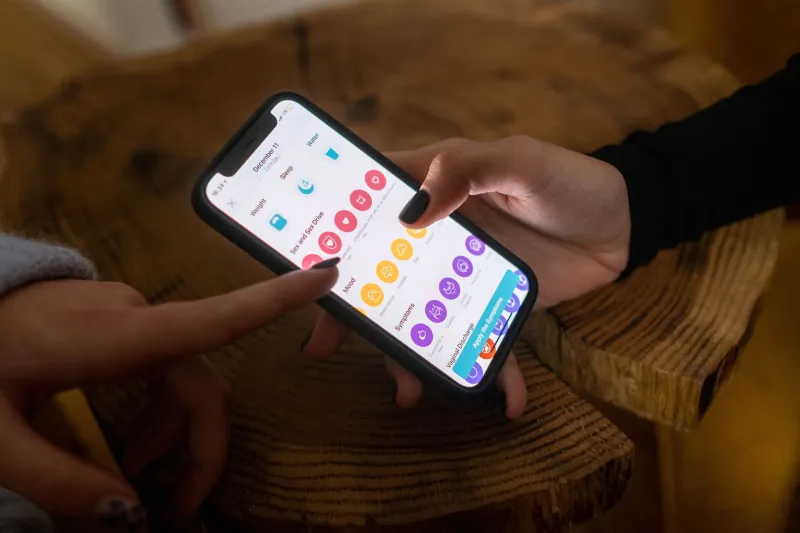
I want to be upfront about something before we get into this: I'm not a mental health professional, and nothing I write here should be mistaken for clinical advice. What I am is someone who spent a year in weekly therapy, found it genuinely helpful, and then hit a point where $800 a month was no longer something I could justify while also paying rent in a city that charges $18 for a salad.
So I did what a lot of people do. I started Googling alternatives. And the internet, as it always does, had opinions. There are apps for everything now — cognitive behavioral therapy frameworks, mood tracking, guided meditation, AI-powered journaling, text-based therapy subscriptions. The market for 'therapy but cheaper' has exploded, and I wanted to know whether any of it was actually worth downloading or whether we're all just paying for the feeling of doing something.
I tested six platforms over four weeks. I tracked my mood daily, noted what I actually used versus what I opened once and forgot about, and tried to be honest with myself about whether anything was moving the needle.
The Lineup
Here's what I worked with: Headspace (free trial, then $13/month), Woebot (free, AI-based), Talkspace (subscription-based text therapy, around $69/week for my plan), Calm (free trial, $70/year), Sanvello (free tier available), and Finch (free, self-care focused with a virtual pet mechanic that I was deeply skeptical of).
I did not use BetterHelp. I have concerns about their data practices and their history with advertising that I'm not comfortable glossing over. That's a personal call, and I'll leave it there.
What Actually Helped
Woebot was the surprise of the whole experiment. It's a free, AI-driven chatbot built on CBT principles, and I went in expecting to hate it. The conversations are text-based, the 'bot' is clearly not a person, and the whole thing sounds like it shouldn't work. But there's something about the low stakes of typing into a bot at 11pm that makes it easier to be honest than it sometimes is with an actual human. The CBT frameworks it walks you through — identifying cognitive distortions, reframing thought patterns — are legitimate tools. They're the same tools my therapist used. The difference is that Woebot can't notice when you're avoiding something, and it can't push back the way a trained person can. But for $0? It's genuinely useful for the moments between sessions, or in my case, the month I didn't have sessions.
Sanvello's free tier has solid mood tracking and some decent CBT-based exercises. I used it consistently for about two weeks before I stopped opening it. That's not a knock on the app — it's a pretty accurate representation of how most of us engage with self-directed wellness tools. The accountability problem is real. Nobody is waiting for you to log in.
Finch, the one with the virtual pet bird, is something I'm almost embarrassed to admit worked on me. The mechanic is simple: you set small self-care goals, complete them, and your bird grows. I know. I know. But there's something about the gentle gamification that made me actually drink water and go outside on days when I otherwise would have stayed in bed catastrophizing. It's not therapy. But it's a surprisingly effective nudge for basic functioning.
What Felt Hollow
Headspace and Calm are well-made apps. The production quality is high, the meditation content is solid, and both have helped me in the past. But I want to be honest about what they are: they're meditation apps. Meditation is good for you. It is not therapy. I noticed the wellness content space has gotten very comfortable blurring that line, and I think it's worth naming. Using Calm when you're anxious is like taking a walk when you have a broken leg — it might help a little, but it's not treating the thing.
Talkspace is where I have the most complicated feelings. The concept is real: you're matched with a licensed therapist who communicates with you via text, audio, or video within a subscription model. My therapist responded thoughtfully and seemed competent. But text-based therapy has real limitations. There's no tone. There's no body language. There's no moment where a therapist looks at you and says 'I notice you changed the subject.' The asynchronous nature means you send a message and wait hours for a response, which is fine for some things and genuinely inadequate for others. At $69 a week, it's significantly cheaper than traditional therapy, but it's not the same thing, and I think the marketing sometimes implies that it is.
The Uncomfortable Math
Here's what I kept coming back to during this month: we've built an enormous market around the idea that mental health support should be accessible, and that's genuinely good. But a lot of what's being sold is support-adjacent — tools that help you manage, cope, and track, without actually addressing the underlying stuff that therapy exists to work through.
That's not nothing. Managing and coping and tracking are valuable. On weeks when I was using Woebot and Finch consistently, I functioned better. I was less reactive. I slept more regularly. But I also knew, in a way that's hard to quantify, that I was maintaining rather than growing. Therapy, when it's working, does something different. It's not comfortable, and you can't do it at 11pm in your pajamas with a virtual bird watching.
What I'd Actually Recommend
If you're between therapists, in a financial gap, or just trying to build some daily mental health habits: Woebot is free and worth your time. Finch is silly and effective. Sanvello's free tier is a solid mood tracker if you'll actually use it.
If you're considering Talkspace or similar services as a genuine therapy replacement, I'd encourage you to think carefully about what you need. For mild anxiety, stress management, or building coping skills, they can be a real resource. For anything more complex, the format has limitations that matter.
And if you're like me — someone who knows what good therapy feels like and is grieving the loss of it for financial reasons — I'd say this: these apps are a bridge, not a destination. Use them. Use them honestly. But keep looking for the real thing when you can.